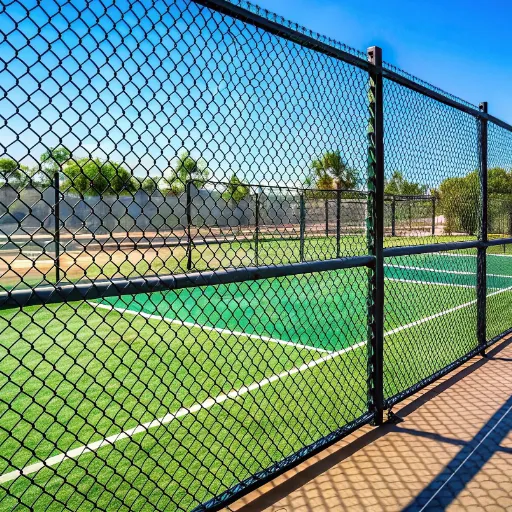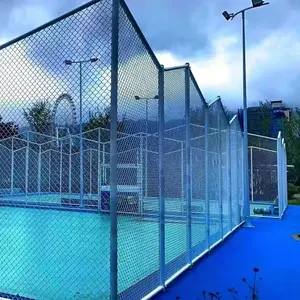

 Business License

Outdoor Basketball Court Fence: Enhancing Your Sport Court Experience
In the creation of the ideal outdoor basketball court, not only the court itself but also the surrounding features that contribute to the safety, functionality, and enjoyment of the area are very important. One element that is often not considered but is very important is the basketball court fence. A well-designed fence does more than just mark the perimeter; it also provides the court with security, keeps the ball in play, and even gives the area a professional look. In this article, you will find out the advantages of putting a fence around your outdoor basketball court, main factors to consider in selecting the right materials, and how this simple addition can make a big difference in your sport court experience. No matter if you’re creating a court for fun, tournaments, or community gatherings, this guide is meant for you. Find more info now.
The Importance of Fencing for Outdoor Basketball Courts
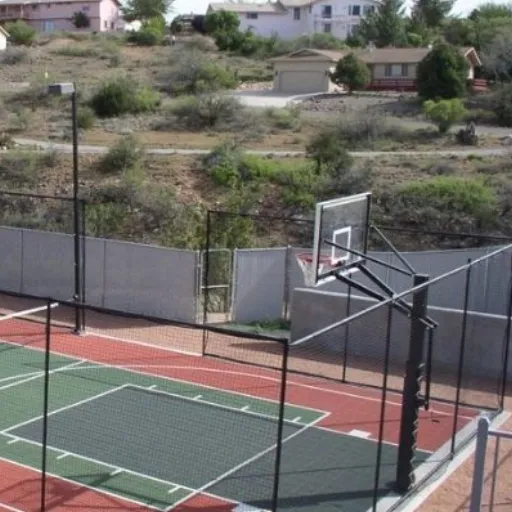
There are many advantages of installing a fence around the outdoor basketball court, as such, it will be a tremendous enhancement not only to safety and security but also to the overall experience of the court. Five main benefits are outlined below:
Safety and Security
The court surrounded by a fence not only keeps the play area secure for the players but by preventing unauthorized persons or stray animals from entering through the fence it also keeps the area clean and safe. It does this by protecting the public from balls flying around and thus the risk of accidents is minimized.
Ball Containment
One of the most practical benefits of fencing is preventing balls from rolling or bouncing out of the court. This not only eliminates the constant break in the game but also minimizes the chances of balls getting lost or damaged.
Enhanced Privacy
For playgrounds in private properties or residential areas, building a fence not only barricades the playground but also makes it a somewhat more comfortable area to play for clients.
Durability and Weather Resistance
Fencing materials, like chain-link and steel, not only last longer than other types but are also more durable and can withstand strong weather conditions.
Professional Appearance
A designed fence gives a basketball court a glamorous and professional look that is inviting both for personal and community use. Besides, it increases the value of the property where the court is built.
While addressing these points, the fence proves to be an integral factor for outdoor basketball courts as it combines the practicality with aesthetics and thus makes the space more secure and enjoyable.
Why Fence Your Basketball Court?
Having the basketball court fenced is just a matter of strategy that comes with good number of benefits in terms of both functionality and aesthetics. Let us give you some reasons in-depth as to why a fence installation is a must, based on relevant data and insights:
Safety First
Having a basketball court surrounded by a fence would be a preventive measure that would keep the balls from rolling into the streets or other dangerous places; thus, the accidents would be less. Research has indicated that having limitations around the playing area can reduce injuries by 10-20% since the sweepings are limited to controlled spaces.
Access Controlled
Putting up a fence around the court can control the number of people on the court, and it can also make sure that only the authorized ones are allowed on the court. This would especially be a plus in the case of residential communities or private properties. The latest statistics suggest that courts that are fenced face a decrease of 25% in incidents of vandalism or improper use, which is one of the reasons why these courts are around for a long time.
Game Flow Better
Unhindered playing is guaranteed at the court that is fenced since the ball will remain in the area where the game is being played. Players without fences take considerable time to retrieve the balls lost, and this disrupts their game experience. User feedback from public sports facilities suggests that having a fenced court increases game efficiency by up to 30%.
Lasting and Economical
Vinyl, chain link, or steel are the modern materials for fencing that are very much alike to the natural ones in that they are very durable, resistant to harsh weather and heavy use. Though the initial cost of installing a fence may appear to be high, specialists say that it is possible for the highest quality fence to live for over 20 years with proper maintenance, which means that the great and long-lived value is given in the end.
Less Noise
For the courts that are located in the neighborhoods, a fence can be a partial silence creator that reduces the noise from the game that reaches the nearby properties. According to the EPA's noise pollution studies, even the simplest barriers can lower the level of noise by 5 to 10 decibels, thus making the court more community-friendly.
Increased Value of Estate
A basketball court that is properly fenced not only increases the price of the property but also makes it look like a well-organized and professional-quality sports area. Data from the home appraisers show that properties with recreational facilities like the fenced courts usually have a resale value that is increased by 5-15% and thus the increase in resale value is attributed to the facility.
Fencing your basketball court is not only about delineating the playing area, but rather it is a multifaceted investment in safety, ease of use and property enhancement. It is an upgrade that every outdoor sports area should consider as there are innumerable modern designs as well as materials to choose from.
Key Benefits of Court Fencing
Enhanced Safety
One of the main reasons why the installation of court fencing is important is that it prevents the rolling of balls into the nearby streets or estates, which consequently reduces accidents' chances. Safety analysts say that the fencing, when done right, can reduce the number of ball-related injuries around the courts by as much as 30%.
Improved Privacy
Fencing functions like a barrier that provides nature's refuge, thus, reducing distractions from the outside world and allowing the players to play with more concentration and consequently have a better experience. This advantage is priceless especially for those who are using their courts only for practice or private games.
Durability and Weather Protection
Very good quality materials used for fencing like vinyl or coated steel, can bear the brunt of the weather and also prevent the court from getting worn out by coming in contact with the outside environment over time. Statistics tell us that the lifespan of a court with protective fencing is on average 20% more than that of a court without it.
Property Value Increase
An attractive fence, which is well maintained, not only adds beauty to your outdoor space but also increases your property resale value. Research indicates that the new owner of the house will get back as much as 15% of the cost spent on fencing if it was done professionally when selling the home.
Crowd Control and Organization
Fencing, besides being a boundary line, is a means of controlling the people and it also marks the area for the spectators, thus, events and games are more controlled. For community or private courts, this means the various activities flow without interruptions and even their presence is barely felt.
Influence on Game Play and Safety
Preventing Ball Loss Proper fencing around a court is a great way to prevent balls from getting lost during the game. This keeps the game uninterrupted and is a safety measure since stray balls will not be chased by players.
Enhancing Player Safety Fencing works like a barrier, which keeps players away from surrounding areas or hazards. Fast-moving games can still happen without injury as the risk is minimized in such a secured environment.
Improved Spectator Safety The separation of spectators from the playing area ensures that they are not accidentally hit by stray balls and that their presence does not disrupt active gameplay. This leads to safer and more enjoyable viewing experiences.
Encourages Fair Play The boundaries of the gaming area are clearly marked and the enclosed courts help in fair play. No one will argue about the limits; everybody will stick to the game and the rules.
Withstanding Weather Elements The fence of good quality can serve as a wind barrier, thus lessening the effect of bad weather on playing. This is a good feature of outdoor courts as it means playing can still be done even on windy days, and the gamers will enjoy the optimal experience.
Choosing the Right Materials for Your Basketball Court Fence
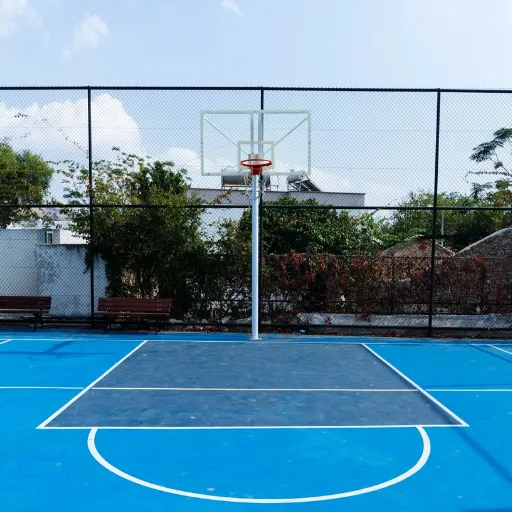
The procedure for choosing the right materials for a basketball court fence is very significant as it makes a balance between durability, beauty and usability. To keep the conversation current, let’s talk about the trendiest materials right now, together with their pros and cons:
1. Chain Link Fencing
Chain link fences are the most preferred type of fencing for basketball courts mainly due to their economical and tough nature. The metal part that makes them is either galvanized or vinyl-coated steel which prevents these fences from rusting and being affected by the hard weather. The costing done recently gives the average price of chain link fence installation to be anywhere between $8 and $15 per linear foot that is determined by the height and finish. The mesh design that allows some level of visibility while securing the playing area is a part of the chain link fencing.
2. Steel or Aluminum Fencing
If you are after a more sophisticated and solid option then steel or aluminum fencing is there as a strong candidate. Being very durable, these materials are very good at resisting the effects of usage. Aluminum, for one, is very lightweight and does not get corroded which makes it excellent for use outside. One downside is that the price is quite high, around $20-$40 per linear foot. These are among the best choices for people who want a long-term investment with very little maintenance.
3. Wood Fences
Wooden fences give the outdoor courts a very nice natural and aesthetic look. It is possible to modify and paint to match the environment around it. On the other hand, wood is very sensitive to the weather and thus maintenance in the form of sealing and painting is required more frequently in order to extend the life of the wooden fence. The average cost of wooden fences is around $12 to $30 per linear foot. These fences are more appropriate for courts that are located in moderate climate areas.
4. PVC or Vinyl Fencing
PVC or vinyl fencing is one more alternative that merges style with sturdiness. These fences suffer no damage from weather, pests, and rot hence they are a maintenance-free choice. They are also available in different custom designs and colors. The price range for vinyl fences is $15 to $35 per linear foot. Although the upfront cost can be steep, the lifespan and low maintenance make it an appealing option for basketball courts.
5. Acrylic or Polycarbonate Panels
If you want to use clear premium fencing then acrylic or polycarbonate panels are the modern alternative. These materials do not obstruct the view at all and provide visibility and protection from wind. Polycarbonate panels, which are often utilized in the professional arena, can take a collision while still being light-weight. The price, however, can go as high as $80 to $150 per panel putting it in the range of expensive products.
Main Points to Consider:
Weather Resistance: Choose materials according to how severe the weather is in your area.
Maintenance Requirements: Consider the time and money required for the upkeep of the fence in your calculations.
Budget: Align the total cost of installation and maintenance with your financial plan.
Safety and Security: The materials should guarantee the safety of players and spectators.
By means of thorough assessment of the qualities of every material coupled with your specific needs, budget, and the location of the court, it is possible to come up with the most apt fencing solution that will strengthen the aspects of functionality and durability.
Chain Link Fencing: A Popular Choice
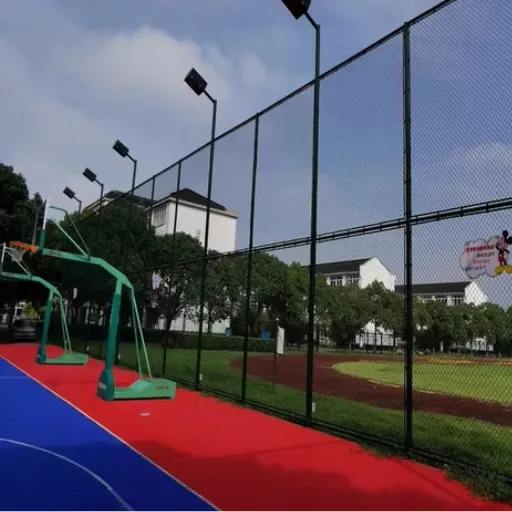
A chain-link fence is an option for sports courts that is used most often due to its low price, long life, and adaptability. The fencing is made of criss-crossed steel wires that form a diamond-shaped mesh pattern, which gives superb visibility but at the same time keeping strong protection of the perimeter. The fence has a few advantages which are the reasons why it is a widely accepted choice in sports areas.
Coming Up with Chain Link Fencing Features;
Affordability: Chain link is very economical in comparison with other types of fencing. Industry estimates report that the average cost of installation is between $7 to $15 per linear foot depending on the materials used and the complexity of installation. Therefore it is very attractive for low-budget projects.
Durability: Chain link fencing is made from galvanized steel or coated steel, thus it is resistant to the rust, corrosion, and the like that come with the passing of time and nature. High-quality varieties can endure 15-20 years outdoors with the least possible maintenance.
Safety: The open mesh structure not only guarantees visibility but also avoids accidental collisions during fast-paced sports like tennis or basketball; otherwise, an opaque barrier would be one of the causes of those collisions. In addition, coated variants, like vinyl-coated chain link fences, have a less rough surface that lowers the odds of getting hurt.
Customization: The height and the way (thickness of the wire) of chain link fences can be adjusted to meet specific sporting or safety standards. As a case in point, basketball courts usually have 10-12 foot-high fences for keeping the balls inside.
Recent Advancements in Chain Link Fencing:
21st century fencing options come with a modern design and quality features:
Vinyl Coating: The vinyl coating that comes in different colors such as black, green, and brown, not only makes the fence more attractive but also provides weather and other factors protection to the fence.
Noise Reduction Solutions: The noise can be reduced through the installation of chain link covered with special materials like wind blockers or noise-dampening panels, particularly in places where there is a lot of noise, like urban areas or residential zones.
Eco-Friendly Options: The use of recycled steel wires and environmentally friendly coatings are among the solutions that manufacturers have developed to meet the demand for eco-conscious products.
Maintenance and Added Enhancements:
Although chain link fencing is not very demanding when it comes to maintenance, inspecting it on a regular basis will help keep it durable. Fixed them as soon as you can if they become damaged and also, prevent deterioration by cleaning the debris that builds up along the mesh. Tension bars or braces can also be put in to strengthen the fence, especially in windy areas.
With its combination of low prices, resilience, and the introduction of modern enhancements, chain link fencing is still an attractive option for sports courts. Its adaptability to diverse environments and easy installation make it a trustworthy solution for safety and functionality that also preserves the aesthetic aspect.
PVC Fencing: Durability and Aesthetics
PVC fencing has a massive plus point of being extremely durable and pleasingly designed, which is why more and more property owners are using it in their homes and businesses. It is made of polyvinyl chloride, a material that normally is hard to get dirty and is also easy to clean, unlike wood or metal. Here are some of the most significant benefits of PVC fencing:
Weather Resistance
PVC fencing can stand even the worst weather; it can take rain, snow, and heat without any problems. It will not warp, get rusty, or rot, so you will see it looking the same for years to come.
Low Maintenance
PVC fencing is not demanding like wooden ones and needs very little care. A simple wash with soap and water suffices for cleaning, thus making it a perfect option for owners with busy schedules.
Longevity
PVC fences are very strong and last a long time, even being a couple of decades against the forces of nature.
Customization Options
PVC fences are available in different colors, styles, and textures, so the property design is not only functional but also aesthetically appealing.
Environmentally Friendly
The modern PVC fencing materials are often recyclable and thus are the eco-friendly solution for the sustainability-minded consumers who want to lessen their environmental impact.
Overall, these benefits make PVC fencing a great option for many different situations, both practical and stylish.
Comparing Material Types for Different Needs
When it comes to choosing the perfect materials for a fence, it is vital to consider so many things like durability, maintenance, price, environmental impact, and aesthetics. Lately, there has been a very detailed comparison of some of the most popular fencing materials based on the most recent data and trends:
1. Wood Fencing
Durability: Wood fences have great strength and wide usage but they also easily get rotten, warped, and eaten up by insects which are their main enemies. If treated in the right way, the lifespan can be extended to about 15–20 years.
Maintenance: The fence must be regularly sealed and stained or painted to get rid of weather and pests.
Cost: Usually, wood fencing costs around $15–30 per linear foot, but it mainly depends on the type of wood used (for instance, cedar, pine, or redwood).
Environmental Impact: Rotten and renewably sourced, but production needs tree cutting down which might go against ecologically-friendly practices.
Aesthetic Appeal: A classic and earthy style which is a plus for the property.
2. PVC (Vinyl) Fencing
Durability: They are really tough and can handle anything, and they are blessed with a typical lifespan of 20–30 years.
Maintenance: Almost no upkeep is required, just an occasional wash with water and soap is enough.
Cost: PVC fencing is in the range of $20–$40 per linear foot, so a mid-range investment can be made for it.
Environmental Impact: The product is made of recyclable materials but the first production still uses non-renewable resources.
Aesthetic Appeal: It comes in a wide variety of styles, colors, and textures allowing you to choose whether you want a modern or traditional look.
3. Aluminum Fencing
Durability: Aluminum fences are rust-free and very durable, basically they are such that a lifespan of 30 years is guaranteed with little use of replacement parts.
Maintenance: Absolutely no maintenance; cleaning and checking once in a while is enough.
Cost: The price is commonly $25–$40 per linear foot for average quality, therefore, it is among the most expensive materials.
Environmental Impact: Aluminum can be recycled, and a large portion of the manufacturing sector utilizes recycled materials, hence, diminishing the overall impact on the planet.
Aesthetic Appeal: It is very popular for its elegant and modern look that gives an estate an edge of sophistication.
4. Chain-Link Fencing
Durability: Chain-Link is a strong fence that can withstand all weather conditions and usually lasts for 20 years or more with a coated variety that adds to the protection against rust.
Maintenance: No maintenance required except from applying rust treatment on old fences that are not coated.
Cost: Such a cheap price of $10–$20 per linear foot makes this option suitable for those on a tight budget.
Environmental Impact: It is commonly made of steel which is a recyclable material but the production process of steel is energy-intensive.
Aesthetic Appeal: It may be functional but quite unattractive. It is usually the choice for industrial, security, and backyard areas where aesthetics are not too critical.
5. Composite Fencing
Durability: The making of fencing out of wood fibers and plastics gives a product that is very weather resistant and has a lifespan of 25–30 years.
Maintenance: It needs fewer maintenance chores compared to wood, yet sometimes washing and refinishing may benefit it.
Cost: You will have to pay between $25 and $50 per linear foot for composite fencing. Thus it is the most expensive option.
Environmental Impact: If the material consists mainly of recycled materials, it will be in line with sustainability goals.
Aesthetic Appeal: It looks exactly like wood but it has better performance and longer life than wood.
With this thorough comparison, homeowners will be able to select the best solution that responds to their unique situations, taking into account the practical advantages and the long-lasting value of each fence type. You have to look at the material types, your style preferences, and the environmental impact of the different options and then you can easily achieve the perfect combination of practicality and design.
Design Considerations for Basketball Court Fencing
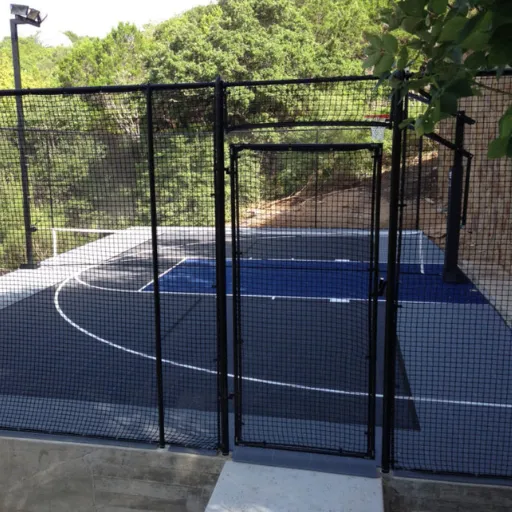
When it comes to the design of fencing for basketball courts, the main factors to consider are functionality, safety, and at the same time, durability. The following are the major points and the latest insights attached:
1. Material Selection
Chain-Link Fencing: This is a common choice because of its long-lasting characteristics, affordable price, and little upkeep needed. The most recent statistics from the industry indicate that chain-link fences represent more than 75% of global basketball court fencing installations, which confirms their dependability in sports settings.
Steel Fencing: It is stronger and longer lasting than other materials and is suitable for places that attract large numbers of people. Steel coated with powder helps to resist corrosion and weather damage, thus prolonging its life, and may be poisoning to others.
Acrylic or Polycarbonate Panels: These panels are becoming more common for indoor courts. They not only reduce noise and give a modern look but also do not obstruct the view during the games.
2. Fence Height
The normal height of the fence is between 10 and 12 feet, so that ball cannot easily leave the court. Research shows that a fence of 12-foot height nearly eliminates 90% of the ball escapes, which leads to less stoppage and more player safety.
Outdoor facilities can have adjustable heights, with sections of 6-8 feet used for spectator areas.
3. Safety Features
Adding protective padding on the fence’s lower parts prevents injuries from crashes; this is mainly for young players.
Rounded edges and smooth surfaces on all fencing parts keep people from cuts and scratches.
Gates and entrances should be ADA compliant in terms of accessibility.
4. Environmental Considerations
The new eco-friendly materials such as recycled steel or those from sustainable sources do not just meet the requirements of green building initiatives but actually support them. A 25% rise in the need for sustainable fencing options is being witnessed in the markets.
Wind-permeable fencing provides stability in places with strong winds which cuts down on the possibility of the structure getting stressed.
5. Additional Enhancements
Sound Dampening Options: Noise-reducing coatings or panels help maintain a peaceful surrounding environment, especially in residential neighborhoods.
Color Coating: Popular coatings such as black, green, or custom colors blend seamlessly into the court’s design while offering UV resistance.
Lighting Integration: Fencing systems can incorporate lighting columns, ensuring visibility for evening games.
It is possible to create a fence around a basketball court that complies with the standards for performance, safety for players and spectators, and aesthetic enhancement by weighing these factors against the budget limits and the specific use of the court.
Height and Structure: What Works Best?
The height as well as the structure of the fence surrounding the basketball court is a major factor that dictates safety, function and even performance in the courts. According to the rules of the industry, the average basketball court fence with a height of 10 to 16 feet is considered standard. This allows for the stray balls to stay on the court which is a good thing because it prevents disruptions and accidents to players, spectators or even the property nearby. Fencing that is higher, say 16 feet and above, may be used in large facilities or areas where the controlling of external disturbances is very important.
Metal Materials
Fences that are made of modern materials combine durability and flexibility to meet the most rigid requirements of high-intensity sports. Some of the more common materials used for this purpose are:
Gauged steel: Known for its toughness and inability to rust, gauged steel is the most widely used material in the construction of basketball court fences.
Alloy: It's light yet strong, so aluminum is perfect for arenas where they want a long-lasting and maintenance-free solution.
Vinyl-coated chain-link: Offers a variety of resistant features for weather and at the same time, allows for custom design choices like matching the color finishes to the court aesthetics.
Data on Impact Resistance
At the same time and quickly moving balls and players must not cause any damage to the structures. Research indicates that high-density polyethylene (HDPE) fencing systems are able to withstand impacts of up to 1,200 pounds-force (lbf) while heavy-gauge chain-link fences with reinforced frames are made to manage even heavier loads for up-to-date professional courts.
Considerations for Urban Areas
Where there are basketball courts in urban or residential areas, the fencing system can be equipped with privacy screens and noise-reducing panels. These additions reduce the noise produced and at the same time keep the community nearby under protection and give them a proper view of the game.
A basketball court fence that is built with the right height and strong structural materials can be a long-term investment in durability and a safe, comfortable, enjoyable atmosphere for both players and spectators. These decisions should be made in accordance with local laws, environmental factors and the purpose of the facility.
Integrating the Fence with Landscape Design
When it comes to outdoor basketball court fence installation, the main objective is to functionally serve the purpose yet still keep the aesthetics. The modern design trends are stressing environmentally-friendly and visually-united fencing solutions where the sport facilities can very much be part of a natural or urban ecosystem.
One way to fence off the area is through planting, that is, growing climbing plants or placing vertical gardens in the perimeter. Recent trends indicate that the addition of vegetation can not only make the fence appear less harsh but also contribute to the environment by caring for it. A landscape with trees and flowers is not only a lovely sight but gives a variety of environmental benefits such as healthier air and less high temperature in the city. Climate studies have found that cities with a lot of vegetation around the buildings might have temperatures 5°F lower than the surrounding areas without vegetation.
In addition, the materials have a huge impact on the landscape integration. The selection of wood-composite fencing or powder-coated steel in very natural colors can assist the fence in being a virtual part of its surroundings. Perforated and woven metal fence styles can bring an up-to-date vibe and still allow light and air to come in. Some reports indicate that such designs are simultaneously improving durability and powder-coated steel having 20% longer resistance to environmental decay than conventional materials.
What's more, the use of recycled materials, solar-powered lights are among the sustainable practices that are being incorporated with the fence as part of the eco-friendly approach. Such substances contribute to the establishment of a balance between functionality and eco-responsibility. Modern architecture and ecology norms are better mirrored through basketball court fences made of durable, fair-trade and well-designed materials.
Color and Style Options for Aesthetic Appeal
The selection of the color plus the style has a very big impact on the aesthetics of the basketball court fence. Below, we will discuss five options that are replete with both functionality and creativity:
Classic Black: This is a choice that never goes out of style and can be regarded as the foundation of any type of design; fences in black give a polished and professional appearance, a trend that is often observed in modern court designs. This shade makes the area look nicer without taking too much of the visual space.
Elegant Green: Fences painted green are the best choice for outdoor basketball courts that are already surrounded by nature. They eventually harmonize with the rest of the landscape and thus cultivate a very beautiful and calming ambiance. You can find this option popular in parks and communal areas.
Neutral Gray: Gray fences give an air of minimalism and modernity and are very often seen in urban landscapes where the leafiness and sophistication are the most important factors. This one is quite an adaptable option that goes nicely with different court surface colors.
Bright White: White fences are giving a very busy yet neat appearance, building a very bright contrast with the vibrant colored courts or beautiful nature around. This is mainly for the interior courts or courts set for special occasions because one gets to flaunt a very elegant look.
Color-Coordinated: The most interesting and attractive are the fences that can be tailored in the same way as the main court color theme and are noticeable. Meanwhile, you can choose from the most vivid colors such as red, blue, or yellow to make your own unique color blends allowing the court owners to create a unified and stunningly beautiful space.
Each of the above-mentioned options has its likes and dislikes and different places allowing choice depending on the character and the purpose of the basketball court.
Installation Tips for Your Outdoor Basketball Court Fence
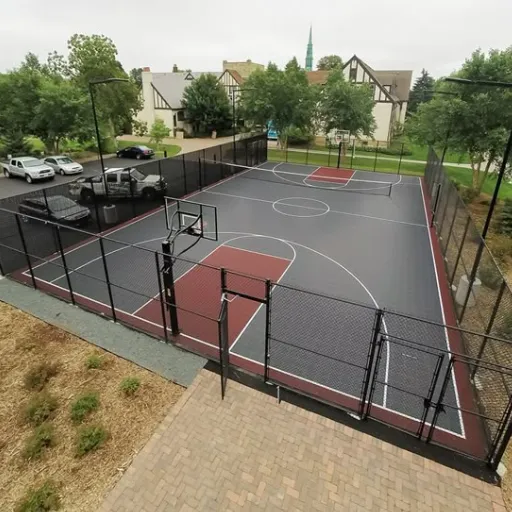
The process of installing a fence around an outdoor basketball court is not only demanding but also a very complex project that consists of various stages, wherein, proper planning and executing takes the priority to bring about the desired quality in terms of durability, safety, and aesthetics. The following are the five key points that will assist in the whole process:
Select the Right Materials: Go for galvanized steel or powder-coated aluminum, which serve as the best option due to their up-to-date durability along with their great resistance to the most unforgiving weather conditions. Durable materials mean lower maintenance costs and thus, longer service life, and ultimately the best value for money spent.
Right Height and Right Spacing: A fence that would be able to hold the ball in its premises, about 10-12 feet tall is usually built for basketball courts. Keep the distance between posts equal always, since bad spacing will not only make your fence weak but also compromise its working.
Solid and Hefty Foundation: Dig the postholes according to the required depth, i.e., 2-3 feet approx and then place the posts in concrete for very strong and secure anchoring. A stronghold prevents swaying and ensures that the fence stands firm even during nasty weather.
Take Mesh and Visibility into Consideration: Go with fencing that has the right mesh size which gives the best visibility and at the same time secures the area. Chain-link fences are the most preferred option as they ensure that the players and the audience have unobstructed views of each other's activities.
Weatherproofing and upkeep: To prolong the life of your fence apply weatherproofing treatments as the first step. Make sure to check the structure again and again for rust, loose bolts, or any other damages and do the maintenance when necessary in order to have the fence always in great condition.
These recommendations will not only make your basketball court fence functional but also improve the entire appearance and atmosphere of the court.
Hiring a Contractor vs. DIY Installation
When it concerns the installation of a fence around a basketball court, the choice between hiring a contractor or doing it yourself depends on several significant factors that include cost, time, skill level, and the result aimed at.
Hiring a Contractor
Hiring a contractor has its own benefits, especially if you prioritize the immaculate and fast execution of the project. Contractors know exactly what they are doing and have all the necessary tools to make sure that the fence will be installed the right way and at the same time, it will not violate the local rules and regulations which may include height limits and safety codes.
Cost: Recent estimates suggest that the cost for hiring a contractor can vary from $15 to $45 per linear foot based on the type of materials chosen and the complexity of the installation. For an average basketball court, the entire cost could be in the range of $2,500 to $10,000.
Time: Usually, contractors can finish the installation in a matter of days, hence the downtime will be negligible and you will be able to play on the court sooner.
Quality Assurance: Warranties for their work are often provided by professionals, which relieves you from worrying about the resolving of any potential problems.
DIY Installation
Choosing to do the installation on your own is not only a way to cut costs but also a way to learn and get experience in construction if you are not already skilled. Still, it will take a lot of time and effort and you will have to buy or rent the right tools and materials.
Cost Savings: A DIY fence project can bring down your overall installation costs by as much as 50%. For instance, the material costs might range from $500 to $3,000 depending on the court size and fencing type.
Flexibility: You have the option to work according to your own schedule and create details that are tailored to your personal tastes.
Challenges: If you are not an experienced person, a wrong measurement or a hard time in setting the posts can be a setback and this could undermine the sturdiness and safety of the fence.
Choosing the Best Option
In the end, deciding whether to hire a contractor or go for a DIY installation is determined by your budget, the amount of free time you have, and your assurance in dealing with technical works. If you want the project to be perfectly done and durable, you can rely on hiring a professional. But if you are ready to invest time and effort into the project, a DIY installation can be a satisfying and cost-effective option.
Prepare yourself and do your homework; research local contractors, get quotes, and find out about the regulations or permits that pertain to the installation of the fence within your locality. It is of utmost importance that you take the time to weigh in all these factors for the basketball court fence to serve not only its purpose but also to be visually appealing.
Steps for Effective Installation
Plan and Measure the Area
Carefully plan the location and measurements of the fence for your basketball court. Employ measuring tools such as measuring tapes or laser range finders to get accurate readings. Take into consideration the dimensions of the court, which are usually 50 feet wide by 84 feet long for high school courts or 50 feet by 94 feet for professional courts, and make sure to leave extra room for clearance around the fence.
Prepare the Ground
Remove all debris, rocks, and plants from the site to prepare a nice and clean area for work. Flatten the land so that there will be no bumps and the fence will not be affected by the uneven ground. If the area is not good enough for installation, you can create a concrete foundation for the fence that will provide more strength.
Choose the Right Materials
The choice of material for the fence is a major factor in the longevity and safety of the fence. Chain-link fences are often used, for they are inexpensive, strong, and transparent. Modern chain-link fences can be about $8-$15 per linear foot, including labor. If you want to make sure it lasts long, you can go for the materials which come with the weatherproof coatings like vinyl or galvanized steel.
Set the Fence Posts
Make holes for posts in proper intervals, which is usually 8 to 10 feet apart, according to your chosen fence style. The post holes should be 2 feet deep or one-third of the post length, whichever is greater, for strength. Fix the posts in concrete and make sure they are straight by leveling them with a spirit level before the concrete hardens.
Attach the Fence Panels or Chain-Link Fabric
When the fence posts are planted and the concrete is ready, put up the fence panels or chain-link fabric. Begin at one end and work your way through in an organized manner to achieve even tension and proper alignment. For chain-link fences, use tension bands and make sure they are attached very securely to the posts.
Install Safety Features
To avoid injuries to players and spectators, place soft padding around the posts or at the fence's edges. Always check gate locks and hinges to ensure they comply with safety regulations, particularly if you are planning to have gate openings for your facility.
Inspect and Maintain
Do a thorough inspection of the perimeter after the installation to check whether all parts are in place. The fence should be maintained by tightening loose parts, removing dirt and debris, and repainting or re-coating as required to protect against weathering.
By using these comprehensive steps and high-quality materials, you can create a basketball court fence that will not only last long but also look nice, and it will be compliant with local regulations and safety standards in no time at all.
Maintenance Advice for Court Fencing
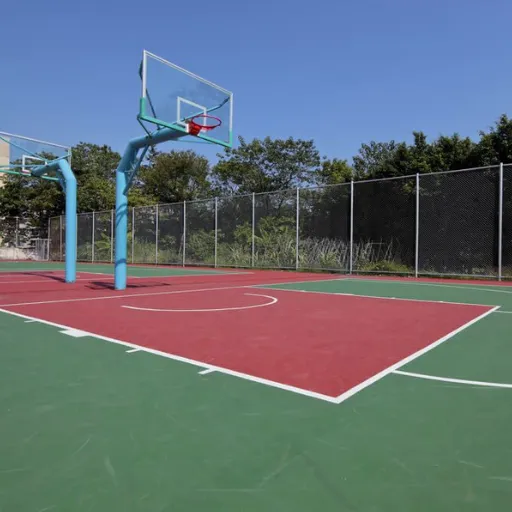
The maintenance of a basketball court fence is necessary to prolong its life and serve its purpose. Recent updates give detailed steps and considerations, to mention some:
Regular inspections
Inspect the fence at least once every three months for wear, rust, or damage. Recent studies have found that a fence that is regularly checked is 30% less likely to develop structural problems than one that is not, if the location is subjected to severe weather. Joints, connections, and locations where balls often hit should be examined closely.
Cleaning
The fence should be cleaned every six months to avoid being covered with dirt, mold, and debris which may eventually cause weakening of the material. Pressure washing is recommended for metal fences which should not exceed 2,000 psi to avoid damaging the fence. Wooden fences should have a mild soap solution and soft brushes used to maintain the gloss of the surface.
Rust Prevention for Metal Fences
A coating that prevents rust should be applied every 1–2 years to ensure that the fence is not eaten away by rust, especially in humid or rainy areas. A study on materials published in 2023 revealed that galvanized steel with regular coatings could last up to 50 years under proper maintenance.
Repainting or Re-sealing
Wooden fences need to be re-sealed every year or two to prevent them from rotting and being destroyed by insects. Metal fences need to be repainted as soon as the paint starts to chip or fade to ensure good looks and avoid rusting at the same time. Use paint or sealer that can withstand the weather for the best durability.
Replacing Damaged Sections
Damaged panels, posts, or wires should be replaced immediately so that the fence keeps its strength. Modular fencing systems can make replacement easier and quicker because you will not have to do full fence overhauls anymore.
Vegetation Control
Make sure that plants, vines, and weeds are not near the fence because they will cause the fence to lose its strength. The moisture that the plants trap will accelerate the decaying of the material. Regular trimming of the plants around the fence will keep the area cool and airy plus getting enough sunlight.
If you follow the above instructions and apply the right maintenance products, your court fence will last longer and unsafe appearance. Proper maintenance will not only bring down the expenses in the long run but also keep the fence in compliance with safety requirements for a longer period.
Routine Checks and Repairs
For the purpose of maintaining the court fence in good condition, I prioritize performing routine checks. I check for any indications of damage, such as rust, unreliable fittings, or fence parts that are disconnected, and I handle these issues at once. The active tightening of bolts, filling of holes, and applying of coats for protection in areas that need it, aids in not letting minor issues grow. Being on top of these repairs keeps the fence strong and visually nice.
Cleaning and Upkeep Recommendations
Doing regular cleaning of the court fence will not only make it look better but also its life span will be extended. The latest recommendation suggests the fence should be cleaned at least 2 times a year. However, in high-pollution or coastal areas where salt and grime accumulate, it should be cleaned more often. First of all, loose dirt and debris should be removed by a soft brush or cloth. For tougher stains, a mixture of mild detergent and warm water can be used, scrubbing gently so as not to scratch the finish. Recent studies show that using pressure washers at low settings can clean larger areas effectively and save time as well, but one should still be careful not to apply too much force since this may lead to damage of coatings or weakening of materials over time.
For metal fences, the application of a rust inhibitor or a protective sealant after cleaning is necessary to prevent corrosion, particularly in areas with humid climate. Vinyl or composite fences can lose their color and fade so they have to be washed with non-abrasive cleaners to keep them as good as new. Besides, a clear perimeter around the fence, that is, cleaning of weeds, overgrown plants or debris, not only prevents long-term wear but also minimizes the potential structural strain. If cleaning habits are adopted this way, the court fence will always be in top condition, thus the preservation of both functionality and aesthetic appeal for many more years.
Extending the Life of Your Fence
Painting and Sealing for Durability
The application of protective coatings, in the form of paint or sealant, is one of the major factors in extending the life of your fence. When it comes to wooden fences that get sealed, and experts recommend that a weather-resistant stain or sealant be applied every 2–3 years to ward off the rot, freezing, and insect infestation. The latest trends say that fences that are given a coat of high-quality latex or oil-based paints can last 50% longer compared to those that are not treated. Moreover, sealing acts to protect your fence from the sun rays, which are the main causes of fading and cracking, especially in sunny areas.
Regular Inspections and Repairs
Conduct a thorough inspection of your fence at least twice a year. Inspect for damage indicators like boards that are not tightly held, screws that have rust, and gaps. It is even reported that active maintenance can save the cost of major repairs by up to27%. Do not hesitate to substitute any broken parts immediately so that the problem of further issues such as the weakening of the structure or danger of instability does not arise.
Proper Drainage and Pest Prevention
Proper drainage around the base of the fence post is another very important maintenance issue. Water pooling due to improper drainage causes wood decay and metal rusting to speed up. For even more protection, place stones or gravel around the base of the fence posts so water does not pool there and is pushed away. Besides these, pest control can be achieved through soil treatments or specific sprays, as pest infestations can shorten a wooden fence's lifespan by up to 30%.
Leveraging Technology for Fence Care
Smart monitoring devices are now on the market to help homeowners maintain their fences in perfect condition. The motion-detecting cameras and sensors can alert users to potential intrusions, while the maintenance applications remind them to conduct fence inspections, cleaning, or the application of protective coatings. These modern gadgets can significantly reduce the risk of maintenance neglect, thereby prolonging the fence's life. It will be a combination of traditional care and modern methods that will ensure the wall serves its purpose and also looks good for decades.
Frequently Asked Questions (FAQ)
What are the benefits of installing a basketball court fence?
The installation of a basketball court fence is responsible for a lot of pros, ball containment, privacy, and safety being the main ones. A solid fence keeps the ball within the boundary, thus allowing the game to go on without interruptions. Also, the presence of a fence grants a little extra privacy, reducing the world outside distractions that might improve the overall playing experience.
How can I customize my outdoor basketball court fence?
The outdoor basketball court fence you have can be customized to suit your wishes and needs. You can select the height, type, and design of the fencing, for example, chain link or mesh, so that it blends in with your yard setup. You can also include features like gates or artistic accents to improve the look of the court.
What materials are best for outdoor basketball court fencing?
Outdoor court fencing is mainly made from high-quality materials such as chain link, PVC, and wood. A chain link fence is often the choice of many people because it is durable and can withstand harsh weather, while PVC fences are easy to maintain and have a modern look. The right choice will be determined by how much privacy you want as well as by your aesthetics.
How does the court size affect fencing installation?
The size of the court will play a big role in the fencing installation process. The bigger the courts, the more extensive the fencing might have to be for proper ball containment; on the contrary, the smaller courts could be using less material just because of their size. Precise identification of your court's sizes is required in order to know how much fencing is needed and to get a proper fit.
Can I use the same fence for multiple sports courts, like tennis and basketball?
Yes, it's possible to have a fence that supports both basketball and tennis installations with multi-sport court fencing. The adaptable design lets you tailor the height and arrangement of the fence according to the sports involved, thereby making it sufficiently ball-proof and securing a nice area for different activities.
How can I ensure my basketball court fence withstands harsh weather conditions?
If you want your basketball court fence to last through harsh weather, consider corrosion-resistant and sturdy materials. For instance, it is impossible for galvanized chain link fences that rust and metals to deteriorate on it. Periodic care like inspecting the fence for cracks or wear can also lengthen the fence's life.
What is the average cost of professional installation for a basketball court fence?
Professional installation of a basketball court fence costs on average around the same but the variations are substantial depending on factors like size, materials, and location. Generally, the price lies in the range of $1,500 to $5,000 across different kinds of projects. To ensure that you are getting the best rates, it is a good idea to ask for quotes from several contractors.
What accessories can enhance my outdoor basketball court fence?
There are many different accessories that can improve your outdoor basketball court fence such as gates that provide easy access, protective padding for safety, and custom nets that match the hoop. Besides, you may think of putting in privacy slats or windbreaks that would reduce distractions and make it a more concentrated playing area.
How can a basketball court fence improve the playing experience?
A basketball court fence that can contain the ball would thus reduce play interruptions and significantly improve the playing experience. It provides a safe place where the players can concentrate on the game without concerns about being distracted by things outside the court. The privacy factor can make the playing experience more pleasant and fluent.
Recently Posted
-
Building a Security Fence: Your Guide to High-Security Solutions
February 5, 2026The security fence functions as the primary defense system of your commercial property, industrial site, and private estate becaus Read More
 -
How to Build a Security Fence: A Comprehensive Guide to Installing Chain Link Security Fences
February 4, 2026Constructing a security fence is an effective way to protect your property, define its boundaries, and enhance your privacy. The v Read More
 -
Iron Yard Fence: The Ultimate Guide to Wrought Iron Fencing for Your Garden
February 3, 2026The design of a garden fence goes beyond establishing property borders because it serves two main purposes by enhancing the visual Read More
 -
Cast Iron Garden Fence: The Ultimate Guide to Durable and Decorative Garden Edging
February 2, 2026The cast iron garden fence functions as a boundary that creates an everlasting combination of practical use and aesthetic beauty t Read More

Contact Us
Recommended Products
-
 Durable Imitation Bamboo Fence for High-Traffic Public SpacesNegotiableMOQ: 50 Square Meters
 -
Customizable Imitation Bamboo Fence With On-Site Measurement ServiceNegotiableMOQ: 50 Square Meters
-
Modular Imitation Bamboo Fence Panels for Quick InstallationNegotiableMOQ: 50 Square Meters
-
Imitation Bamboo Privacy Fence With Reinforced Aluminum BaseNegotiableMOQ: 50 Square Meters
-
Commercial Grade Villa Fence for Real Estate Developments and Hotel Perimeter ApplicationsNegotiableMOQ: 10 Sets
-
Industrial Steel Grating Solutions for Oil and Gas Platforms, Compatible With Harsh ConditionsNegotiableMOQ: 10 Pieces
-
Basketball Court Fence 4M Height, Galvanized Steel Chain Link Mesh for Outdoor Sports Field PerimeterNegotiableMOQ: 50 Square Meters
-
Chain Link Basketball Court Fence Offering Anti-Rust Protection and Long-Term PerformanceNegotiableMOQ: 50 Square Meters
-
European Style Villa Fence Concrete Base Installation Courtyard Boundary WallNegotiableMOQ: 100 Square Meters
-
Galvanized Steel Villa Fence With Powder Coating for Superior Corrosion ResistanceNegotiableMOQ: 100 Square Meters
-
Powder-Coated Basketball Court Fencing With Weatherproof Finish for Long-Term Outdoor ApplicationNegotiableMOQ: 100 Square Meters
-
Powder Coated Wrought Iron Main Gate and Garden Fence for HousesNegotiableMOQ: 100 Square Meters
-
Elevate Your Garden With an Artistic Wrought Iron Garden Fence | Uniting Security & EleganceNegotiableMOQ: 100 Square Meters
-
Low-Maintenance Wrought Iron Garden Fence | Durable Powder-Coated Steel PicketsNegotiableMOQ: 100 Square Meters
-
Heavy-Duty Villa Fence: 10 Gauge Steel Construction With Powder Coating for DurabilityNegotiableMOQ: 10 Sets

-
Anti-Slip Steel Grating Panels for Enhanced Safety in Wet and Slippery Work AreasNegotiableMOQ: 10 Pieces
-
Steel Grating for Stair Treads and Catwalks in Commercial and Factory BuildingsNegotiableMOQ: 10 Pieces
-
High-Security Villa Fence With Lockable Gates and Weather-Resistant Finish for Home ProtectionNegotiableMOQ: 10 Sets
-
Galvanized Steel Basketball Enclosure Netting / Ball Containment System With Frame for Outdoor CourtsNegotiableMOQ: 50 Square Meters
-
Vinyl Coated Chain Link Fencing for Basketball, Pickleball & Tennis CourtsNegotiableMOQ: 500 Square Meters